Gill and Ellie’s story
Gill Ackers has been supporting our work since 2013, including as our former Chair of the Board of Trustees. Here, she shares the story of her daughter Ellie, 29, and why she thinks research is the answer to address the blatant inequalities autistic people with learning disabilities face.
It’s not about making autism itself less challenging, but righting the wrongs autistic people experience.
Imagine finding out your child has the life expectancy of someone from the 15th century. In 2016, researchers in Sweden published a paper suggesting that people who are autistic with both epilepsy and a learning disability might only expect to live until their late thirties, on average**. People like my daughter. As you can imagine, it was quite the shock.
My daughter Ellie is autistic, has a complicated chromosome disorder and severe epilepsy. She lives in supported living and can’t be left alone as she has no sense of danger. She finds communication difficult; she can speak but not have a conversation. She can answer a question if she wants to, but often won’t. She can talk about her feelings, but not usefully. Loud noises seem physically painful for her. She avoids large groups of people, fireworks or barking dogs. On the other hand, she is quite the adrenaline junkie. She loves jet skis and rollercoasters.

Ellie on a jet ski
Developing epilepsy
Ellie developed epilepsy quite late, as many with her chromosome disorder develop it in early childhood. Nobody had tested epilepsy medication on people like Ellie before. Nobody knew what worked and what didn’t. Sadly, epilepsy medication isn’t effective for her.
Like some other autistic people, Ellie tends not to react to medication the way you expect her to; if there’s a long list of side effects, she’ll find one that’s not on the list. She’s never slept for more than a couple of hours at a time, and when she was a child, a friend suggested trying Calpol to help her sleep. It had the reverse effect; instead of feeling sleepy, she was climbing the walls and hyperactive.
When someone can’t speak for themselves, they can be denied justice
It’s only through a better understanding and research that we can manage blatant inequalities
Every time I sought external specialists to help or support Ellie, what she needed didn’t exist.
A few years ago, Ellie had a run with a night-time care worker. Ellie said the agency worker hit her with a remote control. For months afterwards, she refused to be in the room if a TV was on and kept asking us to buy new remote controls.
The Police said they could not prosecute, as Ellie ‘isn’t a reliable witness’. When someone can’t speak for themselves, they can be denied justice.
We spent years trying to find mental health support to help her get over that incident. We could not find anyone who could help her, as the vast majority of mental health support is talking therapy, which wouldn’t work for Ellie. But no-one seems to know what will work instead. We did get music therapy after a four-year wait, but I’m not sure whether that really helped her deal with her trauma or whether she just enjoyed it.
Another example of the difficulties autistic people with learning disabilities face is when Ellie needed a tooth filling. It sounds simple and straightforward, but it took three years to get her into a specialist unit in a hospital where she could have an anaesthetic, by which time the tooth needed to be taken out.
It’s only through a better understanding and research that we can manage blatant inequalities like these. That’s why I’ve been supporting Autistica for over 10 years; there is still so much that we need to learn.
Helping Ellie feel calm and in control
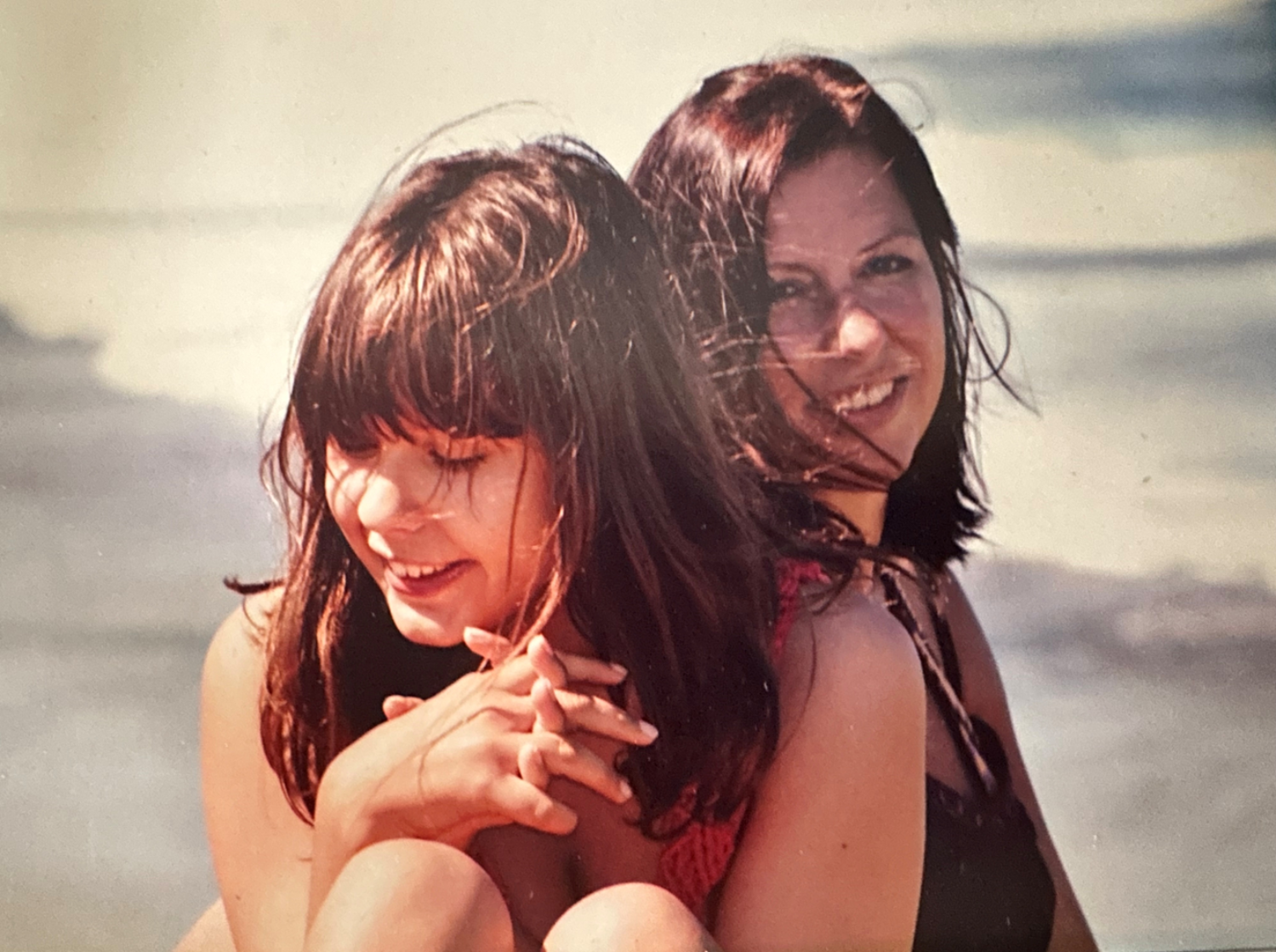
Ellie as a child with Gill at the beach
Over the years, we’ve found a few things that work well for Ellie day-to-day. She’s incredibly routine-oriented; it helps her feel calm and in control. She does best when life is busy, so she works at a farm feeding animals or collecting and grading eggs and goes swimming, trampolining and horse riding. The more physically active she is, the better.
When spring comes around, she’ll watch videos of people mowing their lawns or using a strimmer to get used to the sound before hearing it in person. When she feels anxious, she’ll repeat a book or story so she knows what will happen next. She has an amazing memory and has a great mind for detail in her favourite films and songs.
Why I support Autistica
It’s not about making autism itself less challenging but righting the wrongs autistic people experience. For me, it’s important to speak up for the people who can’t speak for themselves.
There are lots of organisations trying to change things for autistic people on an individual level, but I believe Autistica is uniquely positioned to make a real difference at a societal level. Autistica is the only charity that tries to change inequalities, rather than find new ways to manage them.
As a parent, I do everything I can to make sure Ellie can have as rich and full a life as possible. But I know it’s through research that things will get better for other people like her.
A note on the research paper
**At the beginning of her story, Gill refers to the research paper (Hirvikoski et al., 2016). In their report, the average death for autistic people with learning disabilities was 39.5 years, with a range of 18-60 years. When the paper was published, the most common cause of death in this group was epilepsy. This study was unfortunately widely misquoted, which has caused anxiety in autistic people and their families.
More recent research in the UK suggests early death for this group is now understood to be around age 49-54 years. (O'Nions et al. 2024) and another study reported average age 53 ± 17 years (range 18-86; Sun et al. 2023). In addition, "reviews by psychiatrists in intellectual disability [learning disability] services were associated with a 72% reduction in the odds of death compared to neurology services". (Sun et al., 2023).