Mathew's marathon fundraising efforts
Mathew, 39, is running the 2026 London Marathon for in #TeamAutistica. He’s a senior leader at HMP Buckley Hall. Staff and prisoners have united to support Mathew’s marathon efforts, finding common ground in neurodiversity.
Why are you taking on the London Marathon for Autistica?
My son Oliver is autistic with ADHD. He’s 12 and every day, he faces challenges that other people don't see. He's got sensory sensitivities and social communication barriers (although he's a fantastic talker and never shuts up!). It inspires me how he navigates every single day. The marathon I’m running is nothing compared to him going through school, education and social scenarios. He shows such strength, resilience and character.
When I was at school, you had what I'd now call neurotypical kids and the ‘naughty kids’; the different kids. We didn't have that understanding about why they were different. I was fortunate; my mum and dad brought me up with good values and to respect people, but not everybody is like that. And I saw some of these kids getting bullied. That's what I was worried about with Oliver.
But I can see how things are starting to change now. I love that awareness of neurodiversity is growing. His friends are really supportive of him and his needs. They make sure he feels included. My hope for my boy is that he lives a long, happy, and healthy life - whether that's being a dustbin man, working at a fast food-chain or a high-flyer in a law firm.
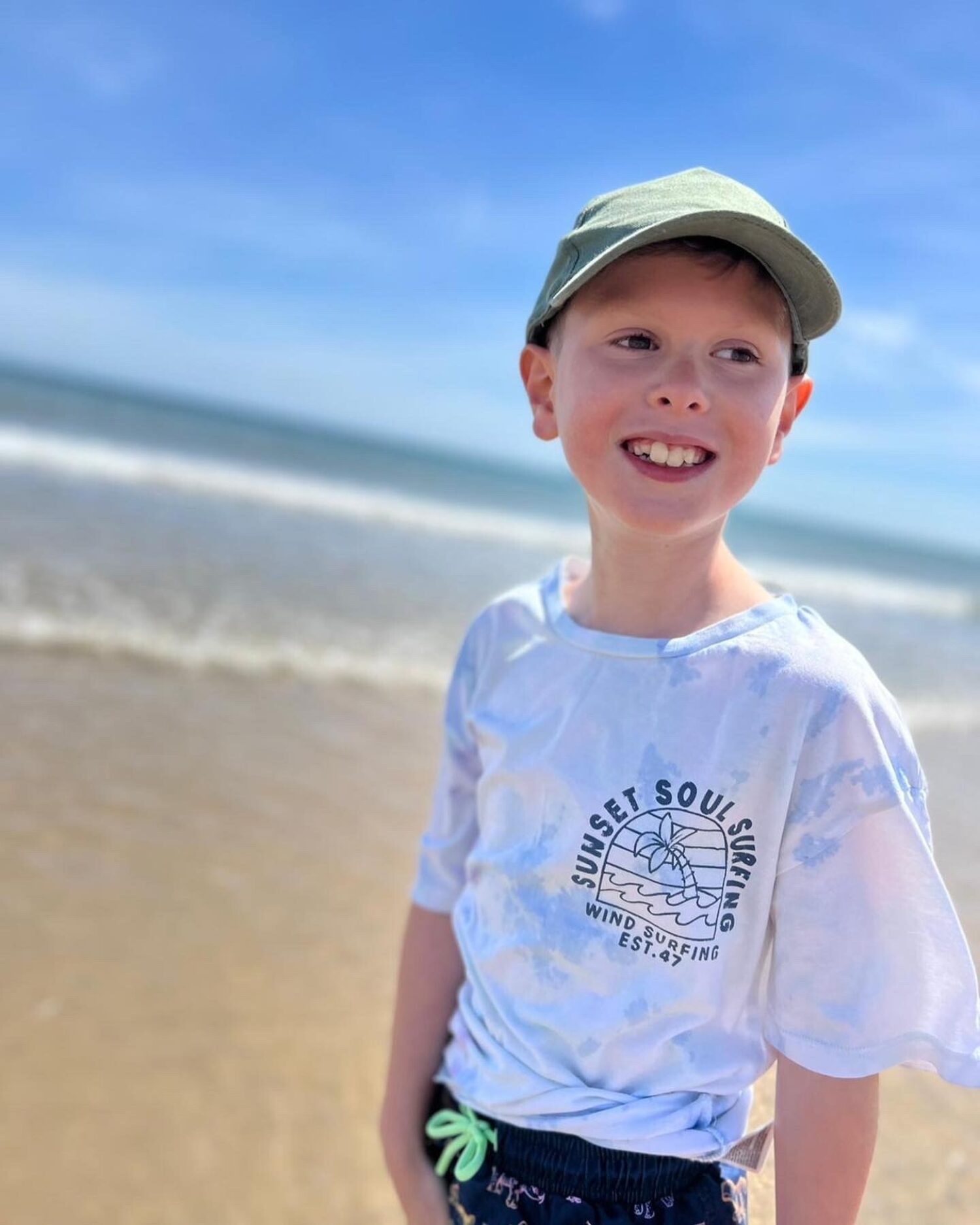
Mathew's son, Oliver
The marathon I’m running is nothing compared to him going through school, education and social scenarios. He shows such strength, resilience and character.
Could you tell us what you've been doing to reach your fundraising target?
I work at HMP Buckley Hall. Even though there are a few barriers between staff and prisoners, what unites everybody is the challenges that we face. Lots of us have a connection with neurodiversity, whether we’re neurodivergent ourselves or have neurodivergent family members. We have a shared understanding. I told the prisoners that we're going to raise money for autism research. I explained how research can positively impact their family members. So many people have supported my fundraising.
We've had coffee mornings, where prisoners have given a pound or two for bacon, a coffee, which are luxuries they don't normally get. We’ve also raised money on our neurodiversity bus. It’s a single-decker bus that we have turned into a sensory bus, where we’ve held raffles. We've also held awareness events to help promote understanding.
One highlight was the colour run. It's basically an adult version of a water fight where they're throwing colours at each other on this parkrun course, and everyone gets covered in colour. It's a bit of organised chaos. Our security department hated it! But it's something that has brought staff and prisoners together.
When I run the marathon on Sunday, a couple of prisoners are running a marathon within our prison gym. They’ll do the 26 miles lapping an old school hall, and others are tag teaming or running it over a few days.
Aside from fundraising, there are lots we’re doing around neurodiversity in Buckley Hall. This includes things like inclusive visiting hours and creating information leaflets for neurodivergent family members so they know what to expect during visitation. We’re lucky to have the brilliant Joanne, our neurodiversity lead, who has been working hard to make Buckley Hall as inclusive as possible. She’s really passionate about making things inclusive.
We've got a saying at Buckley Hall, ‘We do things differently.’ We push the boundaries of what is seen as normal. Sometimes prisoners like it so much here that they don’t want to leave!
Why do you think prisoners feel united by neurodiversity?
When I induct new staff, I say, ‘These prisoners have been judged. They go through a judge and jury. I'm not here to judge them.’ I’ll explain that I’m here to provide them with the best stay we can, to help reduce reoffending rates. I need to put all the right support around them. So, I need to find a common ground. Autism, neurodiversity and inclusion are common ground. 63% of our current inmates have some type of neurodivergent need. Imagine being able to capture that before they came into custody? For example, working with them individually or finding an intervention that could prevent them from entering the criminal justice system.
I hope that neurodiversity understanding grows to become a substantial function within a prison. I think it could be essential to reducing reoffending. With enough resources and understanding, I'm confident we can build and shape prisoners so they have the skills to support themselves when they return to the community and live law-abiding lives.
What will keep you motivated on race day?
The reason I'm doing the marathon and the reason why I'm passionate about it is Oliver. He faces the equivalent of a marathon every single day, navigating the challenges he experiences. He does that with no training. If I cannot run for 26 miles, there's something wrong with me because he does that every single day in a different form.
Mathew and his family