Elisabeth's six at 60 challenge
Elisabeth is taking on six 60-themed challenges to mark her milestone birthday. She shares why she is doing this challenge, why autism research matters, and what it’s like finding out you’re autistic at 60.
Tell us about the challenges you're taking on for Autistica
I recently turned 60, and I wanted to do something to mark this significant age. I run the Brighton Marathon every year but haven’t done a charity challenge since my first-ever marathon in 2008.
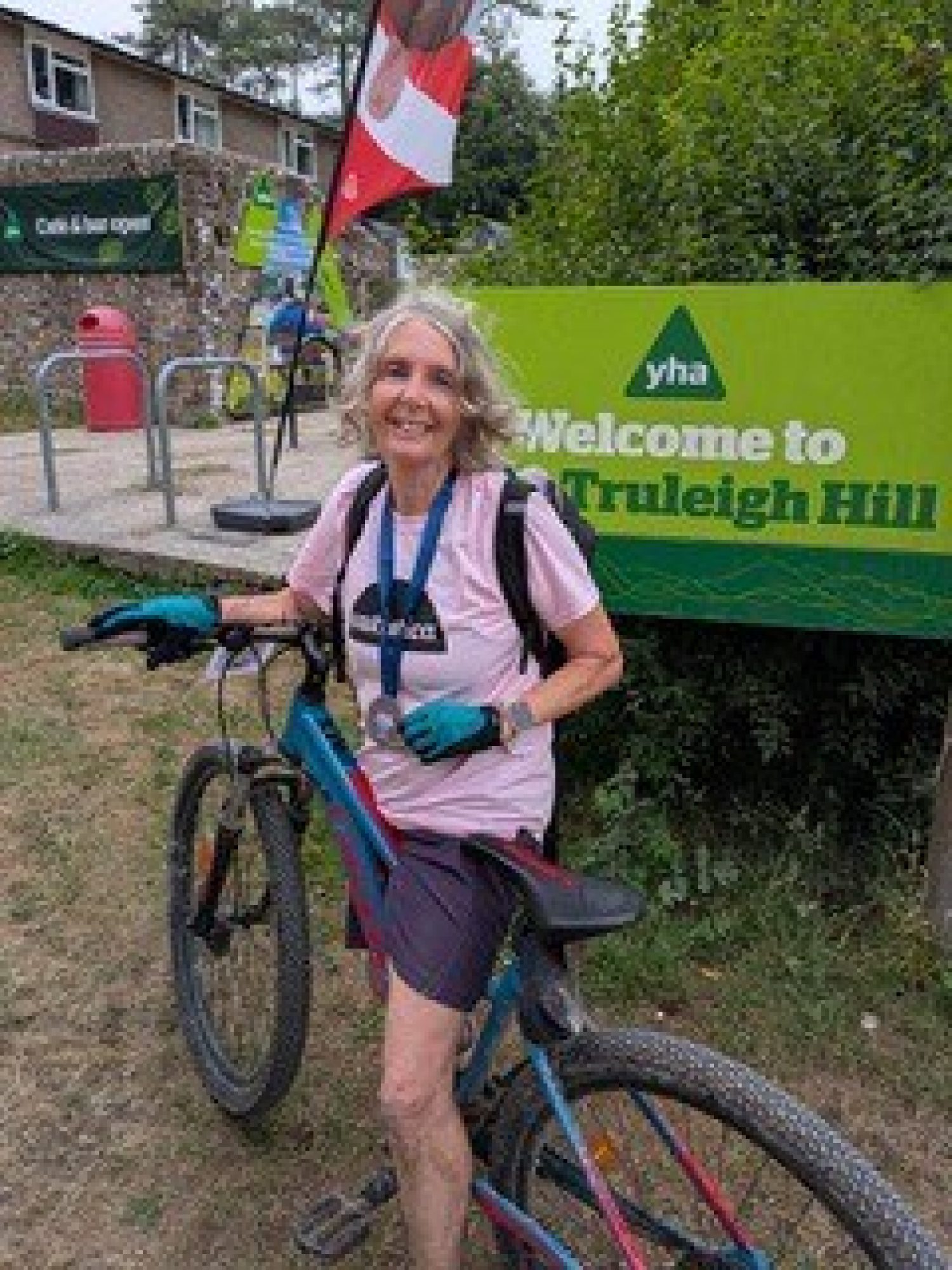
Elisabeth on her off-road bike challenge.
I’m completing six challenges for my 60th, and I’m hoping to raise £6,000 for Autistica. I thought Six at 60 has a nice ring to it.
My six challenges are:
- A 60-kilometre run
- A sixty-mile off-road bike ride
- A 60-mile canoe expedition across Scotland
- A 60-mile walk along St Cuthbert's Way
- 60 lengths of a local outdoor cold pool, and
- 60 miles of indoor rowing over five days.
Have you completed any challenges yet? And which will be the most out of your comfort zone?
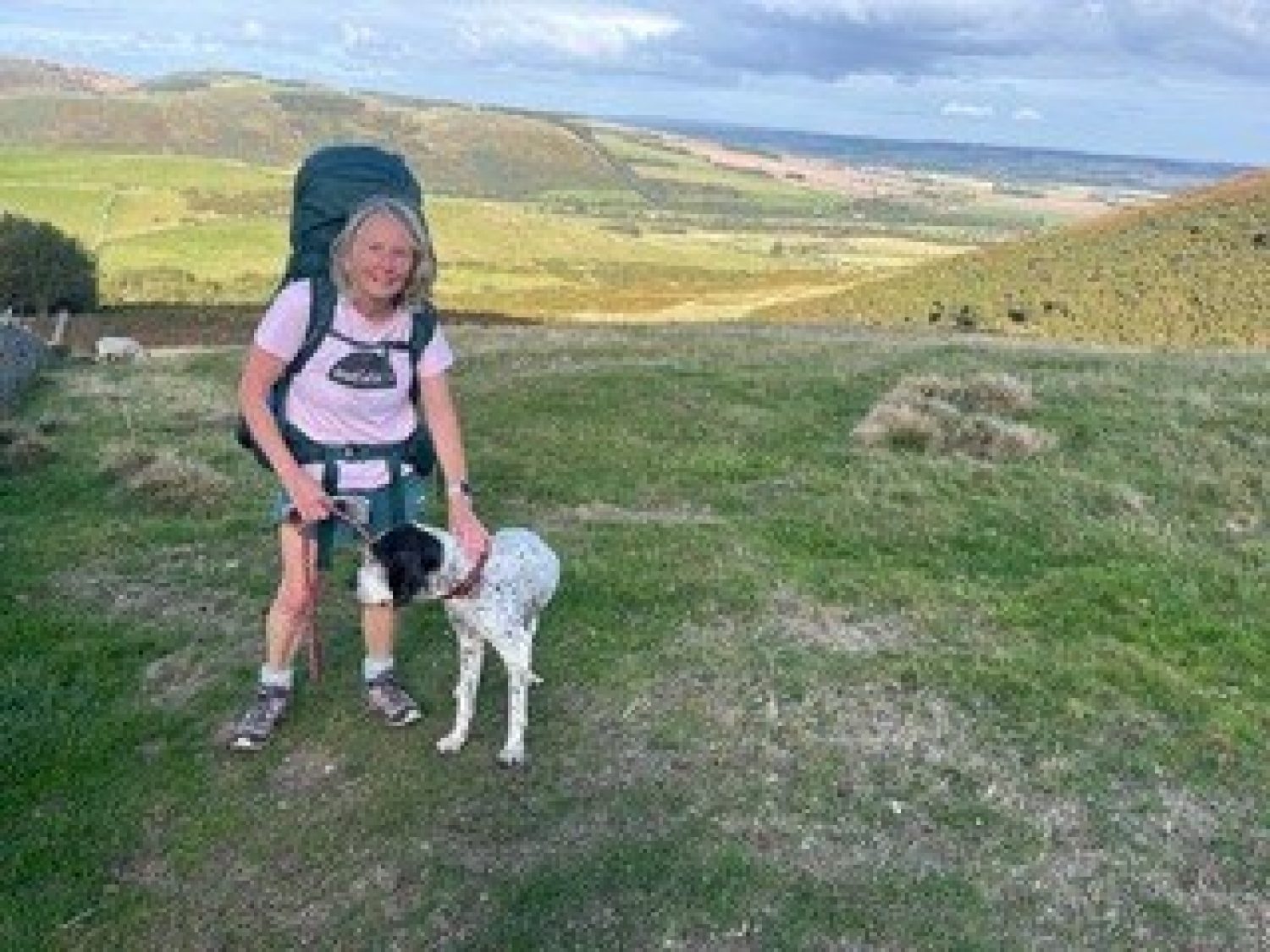
Elisabeth and her dog on St Culthbert's Way
I completed the cycle ride on the South Downs, from Winchester to Truleigh Hill. Unfortunately, the canoe expedition couldn’t happen because Storm Floris arrived in Scotland the week I had booked to do it. I didn't quite manage to run 60k when I initially planned, but I'll try again with a different style event next year. I have just come back from the walk, which was amazing - once I overcame the challenge of walking with a full pack and camping on my own. Some of the route was in the Cheviots, which is a part of the country I haven't walked in before. The scenery was stunning!
I’ll find swimming in Pells Pool quite hard because of the cold. It’s not a heated pool. My first visit was with a friend who is a sea swimmer, and she made sure I got in. Once I was swimming, it wasn't too bad. But, even so, I felt really cold for a good few hours afterwards. I am getting used to it, but it is too cold for me to do 60 lengths all in one go without splashing out on a wetsuit, as I am a slow swimmer.
I'll be quite relieved when I can't get back to just running. I consider running my stimming. If I don't run, I get quite agitated and overwhelmed. Although I am beginning to understand why people rave about cold-water swimming!
What are your motivations for doing these challenges?
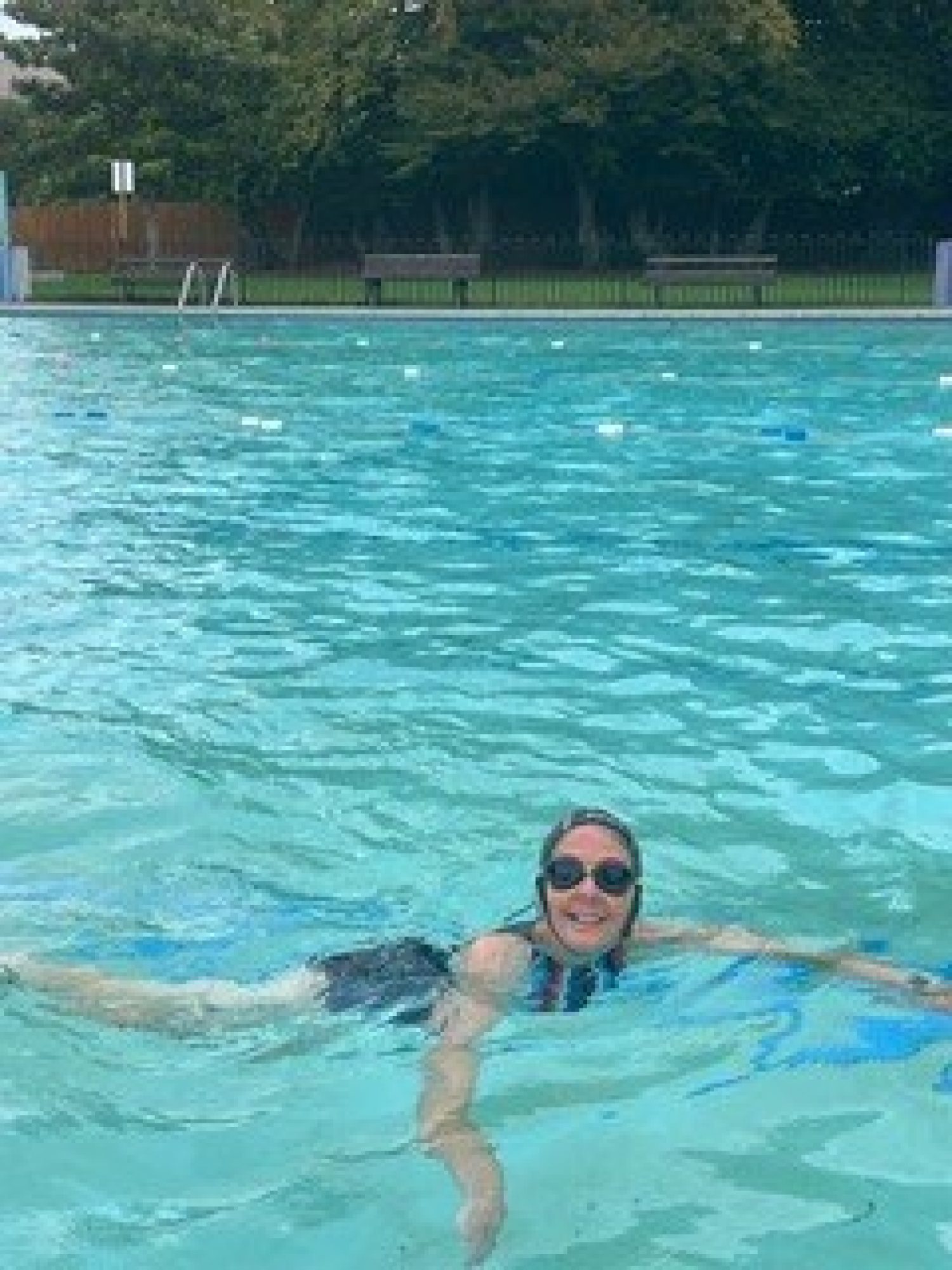
Getting used to cold water swimming
I first found out about Autistica when one of my children was diagnosed with autism at 17. I was impressed by the things that Autistica were researching as they were so relevant to everyday life.
I recently had my autism assessment, and I'm autistic too. It wasn't much of a surprise, but it’s still sinking in. Finding out I’m autistic makes so much sense.
I've had a lifetime of mental health problems, like eating disorders, depression, and anxiety. I also always felt that I didn’t ‘fit in’. I always wanted to change, and that’s what made life difficult. It's good to be able to make sense of it all. It’s given me the chance to be a bit kinder to myself and accept that I am who I am; I don't have to try to change.
I wanted to support an autism research charity because I worked in scientific research for many years. I researched the genetics of schizophrenia and bipolar disorder. I've always been interested in the genetics of mental health.. Part of my interest is because I am adopted (paternally), and my biological father had schizophrenia
Research is important to me because it finds hard evidence to support changes.
To make a difference, the research has to be relevant. It seems that Autistica has a good network of people who make sure that that's the case, such as the Autistica Network and the Insight Group.
Which of our 2030 Goals matters most to you and why?
I think that they are all really important. But I think what stands out is the plan to have support from day one. There is so little support available for autistic people.
When people get assessed for autism, it’s a lottery if there is any support available after diagnosis. If you're lucky, you might be sent a report with website links, which isn’t particularly helpful, from my experience.
One of my children did get some support, but that's mainly because she had reached a crisis point. But we still had to fight for it.
Thank you, Elisabeth, for your invaluable support and for sharing your story.
If Elisabeth’s story has inspired you to take on a challenge to support life-changing autism research, explore our challenge events, or tell us about your own challenge.