Rachel's Christmas story
As part of our All is Calm campaign, Rachel shares her experiences of Christmas and navigating group meals as an autistic person in recovery from anorexia.
Rachel’s story includes references to eating disorders. Please read with care.
Christmas combines lots of things that can be difficult for autistic people: pressure, lots of socialising, the change of routine, sensory overwhelm, unfamiliarity, and uncertainty. It can lead to a lot of expectation and stress. Especially when it comes to Christmas meals.
Christmas meals
Food is such an integral part of Christmas. If you look at Christmas adverts, most of them have food in them, which is easy to miss if you haven’t had challenges with eating. So much of coming together around Christmas can centre around meals, which I find tough as an autistic person and someone recovering from an eating disorder.
Lots of elements of sociable eating can be difficult for an autistic person. Sociable meals often revolve around trying new things, large group conversations, and unpredictable behaviour if people are drinking. Eating at restaurants can be noisy, bright and full of overpowering smells. Visiting a new restaurant brings a lack of routine and control over an unfamiliar environment. It can lead to sensory overload.
No more 'harmless' comments, please
Many autistic people have experienced comments from non-autistic people about how they eat. As an autistic person recovering from an eating disorder, I find it helpful when people don't comment on what I’m eating.
One ‘harmless’ comment could be the difference between me feeling safe and welcome in that environment and feeling like I need to retract and protect myself.
Nowadays, it helps a lot that people in my life are aware and understand my struggles with an eating disorder. Someone might want to say something to celebrate my progress, but I want people to know it can still be difficult, even if I’m not using the same coping mechanisms I once was, or if my physical appearance looks different.
While I may present in a certain way, that may not actually be how I’m feeling. Having that awareness from other people and that sensitivity makes a big difference.
It’s important to meet someone where they’re at, be respectful and not make assumptions.
Enjoying Christmas, but with adjustments
A lot of us feel the pressure to make Christmas picture-perfect. But we don’t all experience Christmas in that way.
I think it’s important for non-autistic people to recognise that even though some autistic people may find certain aspects of Christmas difficult, that does not mean we don't want to participate, but we might need some elements adapted.
In the past, we've had big family gatherings, hosting family members that we don't see that often, which puts a lot of pressure on that one day. When I was overwhelmed, I masked how I felt. I was in survival mode. I couldn’t fully participate. Now, we tell our wider family that they are welcome to visit, but we can’t host them overnight. It makes things much easier and can mean spending Christmas with my immediate family.
It's important to meet your own autistic needs around Christmas, because ultimately. You deserve to do what's right for you. It doesn't have to make sense to other people.
Appreciating the things that I find meaningful
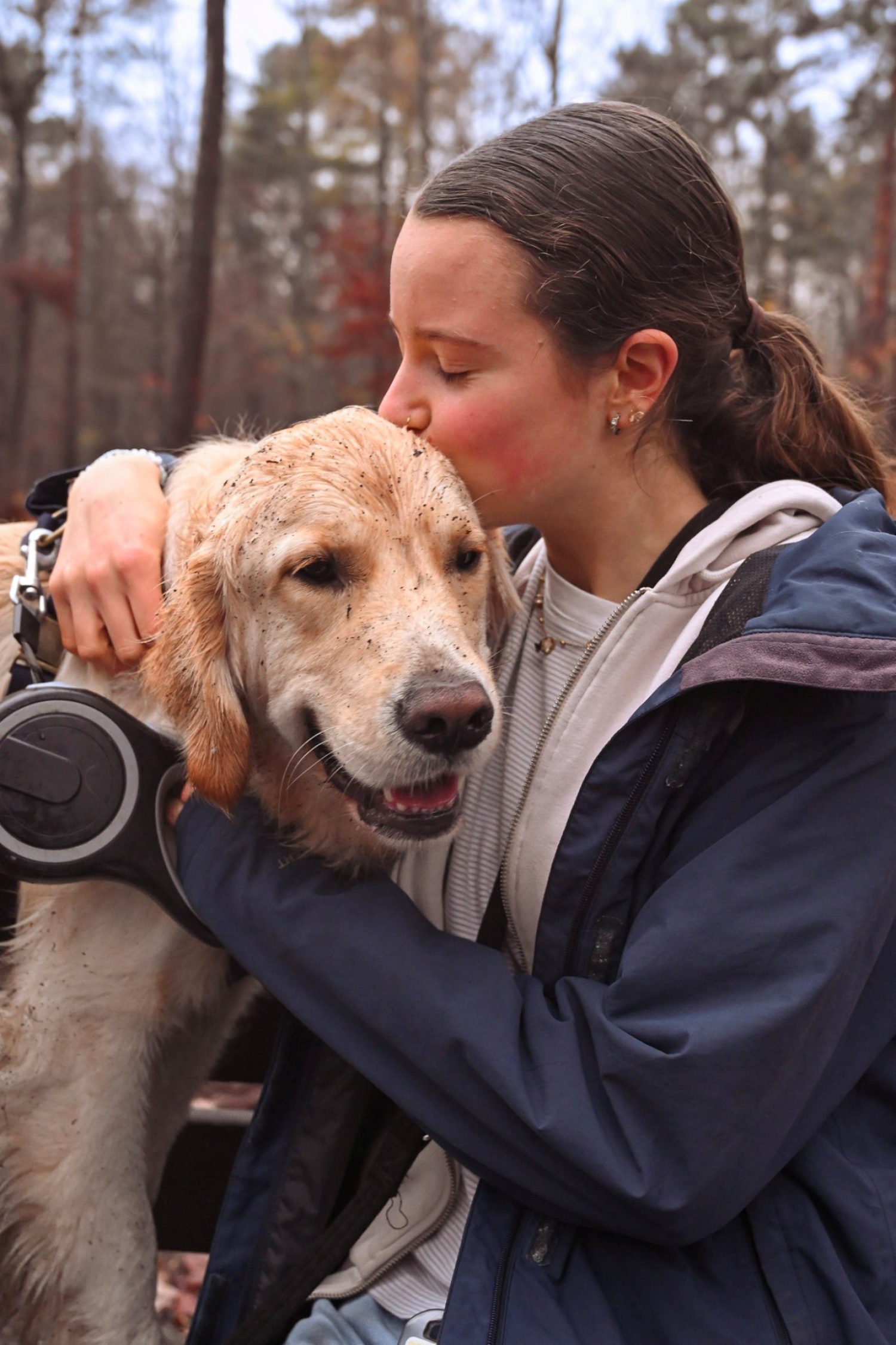
Rachel and Cruz
Since taking the pressure off, that's helped me really enjoy the things I find meaningful. This year, it's my first Christmas with my support dog, Cruz. I’m excited to make our own Christmas traditions. As someone who has struggled with their mental health, it can sometimes be difficult to experience joy the same way I see others do. So, I'm looking forward to experiencing joy through him.
Bringing him joy brings me joy, whether that be a festive walk, some Christmas treats or a dog advent calendar. Making things special for him makes me smile.
I don't think Christmas has to be perfect, but just authentic. When we adapt Christmas to help create autistic joy, it is pure, authentic magic.
Thank you, Rachel, for sharing your story. If you want more tips for supporting autistic loved ones this Christmas, read our Inclusive Christmas Guide, which includes a section on eating at Christmas time.